Our Stories

Telling Stories With a MILTON Education: Two Alumni Share Their Paths to Writing

November 3, 2026

What can you do with a MILTON education? For Jordan Fontheim (‘03) and Molly Kurtzer-Ellenbogen (‘22), the answer is share people’s stories and help audiences analyze the world around them through writing. Jordan is the author of the upcoming book The Boy Who Vanished, which tells the story of his grandparents, two Holocaust survivors. Molly is studying journalism and linguistics at Northwestern University’s Medill School of Journalism. Below, both share why they pursued these paths, what draws them to writing, and the role MILTON has played in their lives today.

*This is the first in a series of articles featuring MILTON alumni and the many different paths they choose to pursue.

Jordan Fontheim ('03)

Talk about the experience of writing this book. What made you decide to take on this project? What was the process like?

Family history was always a part of my life. Even as a young kid, I can remember my grandfather talking about the Holocaust. He talked not just about his own story, but about what happened throughout Europe. I learned that history matters because it helps us understand current events. 

The project of writing this book started when my aunt forwarded me the initial manuscript of my grandfather’s memoir nearly five years ago. I started editing it with her and Fred Rosenbaum, the historian who worked with my grandfather to tell his story, and the three of us worked to edit, revise, and add content. Over the past several years, I’ve become immersed in my grandfather’s diaries and the post-war letters he wrote to my grandmother, the 9-hour oral history interview he gave to the US Holocaust Memorial Museum, and the countless documents and artifacts he kept. I am still amazed by how much he was able to keep while he was in hiding and on the run. 

My grandmother, Margot, went underground alongside him, so this is her story too. I found a new connection with his story, built a new relationship with the young man who went through such a terrible tragedy, and developed a new lens through which to view today’s world.

What has been the most memorable or rewarding part of writing this book?

Believe it or not, one of the most memorable moments came when I got laid off from a big consulting firm in the fall of 2023. I had been working on the book as a hobby and was blindsided by the layoff, but it ended up being such a blessing. I ended up with four and a half months to work on the book full-time. That was when I transitioned from helping with the book to leading the project. I felt a greater sense of accountability and responsibility to his story, and I decided to try to get it published by a major publisher.

The most fulfilling part has been seeing the person behind the stories my grandfather told. He always told me about the Nazis, what they did, and what happened to his family, but when I was a child talking to a grandparent, it was hard to imagine him as the young person underneath all that. Reading his diary let me meet the young man behind the stories.

We know you are an active member of the DC Jewish community. What does that look like for you?

Beyond just going to synagogue services, I sing in a Jewish a-cappella group called JewKvox. We perform at synagogues and make funny Jewish holiday parody videos. My wife and I are also part of a group of friends that has been doing a monthly Shabbat dinner (shout out Shabbat Club) since I met her. Now that there are some young kids involved, it has turned from a Shabbat dinner into a Shabbat lunch, complete with song sessions. Having a standing monthly Shabbat has been a meaningful part of my DC Jewish experience.

What is one way you have drawn from your experience at MILTON since leaving?

JPDS/MILTON created such an amazing foundation for my understanding of Judaism: the practice, the language, the stories, as well as a caring education that I certainly bring forward into my life as an adult. My wife likes to joke that I remember everything I ever learned at Jewish Day School. I still talk to my Savta in Hebrew.

I was also taught to learn my family history at school; I interviewed my grandparents, brought them to Share the Nachas Day, and drew family trees. What I learned in the classroom reinforced what I was experiencing at home. 

What is the biggest thing you want readers to take away from your book?

There are three things I want everyone to take away.

  • Take an interest in your family story and the people behind it. I learned so much more about my grandfather’s story working on the book, but it also made me realize that in spite of how much documentation he left behind, there were still questions that I wish he were around for me to ask, especially what he was thinking and feeling as he experienced everything.
  • Second, we must stand up for each other. We must never let something like this happen again to anyone. It is our responsibility as stewards of the Holocaust story to lead by example in pursuing freedom and protection for Jewish people and for all people, everywhere.
  • Finally, start local. My grandparents’ neighbors in Berlin were the first people who made them feel isolated, but it was also neighbors in the village where they hid who saved them. Your home and the people next door are where you can always have the biggest impact. 

The Boy Who Vanished comes out November 17. Pre-order your copy now! Jordan is also hosting a launch event at Politics and Prose with NYT Bestseller David Litt on November 18, and hopes to see some familiar faces there.

Jordan Fontheim | Jewish Book Council

Molly Kurtzer-Ellenbogen ('22)

Talk about your college application and selection process. How did you eventually end up at Northwestern’s Medill School of Journalism?

When I toured Northwestern it was freezing, but I came away from the tour incredibly drawn to the school. That summer, I attended a month-long summer journalism program at Northwestern. The days there were long, packed with workshops and deadlines, but I enjoyed every minute and got more proof that the campus, the school, and the people there were right for me. The most compelling factor was that almost every single professor at the program was themselves a Northwestern alum.

The only thing that made me second-guess Northwestern was that I [was worried attending Medill meant] tying myself to a career I wasn’t set on yet. I soon realized that an enormous portion of Medill’s graduates don’t pursue traditional journalism careers, and almost every single student adds a second major or a minor in a different field. There was plenty of opportunity to explore academically, and I could maintain my interest in journalism without committing to anything.

How did you get involved with journalism? Why are you pursuing it in college?

I first got involved with journalism almost incidentally. The summer before my freshman year at Georgetown Day School, I received an email from the editors of the newspaper, the Augur Bit, telling freshmen to sign up for their annual week-long summer “boot camp.” I signed up as a way to find friends before school started, but I ended up receiving an award for best article written by a freshman. As a newbie in every sense of the word, that small bit of recognition gave me the confidence to jump in.

In addition to the Bit, two summer programs cemented my love for journalism: the School of the New York Times and Northwestern’s summer journalism program. In each of these programs, I interviewed two local politicians who went on to gain national recognition. I gained my first real sense of the privilege, pride, and responsibility that comes with access to people in power. That combination is what pulls me to journalism. It pushes me out of my comfort zone in the best way while combining my love of writing, political engagement, and ethics. I talk to more people, engage with more perspectives, and ask more questions than I ever would without it. I then get to give my sources voices and my readers information that potentially shapes the choices they make.

What is a day in your life like at school?

I think a lot of people go into college expecting to spend hours buried in work every day, myself included. Northwestern is of course a rigorous school, but I have found more than enough time to do everything else I care about. I almost always have time to grab coffee with people from Hillel, head into the city for an afternoon, or get together with the crossword club. 

One of the best ways I spend my time is technically homework. Almost every day, I go out into Evanston to interview strangers for assignments from my journalism class. Many of the most interesting conversations I’ve ever had have come during man-on-the-street interviews. I’ve met a Venezuelan political dissident turned coffee shop owner, a Reiki master with remarkably strong opinions on Daylight Saving Time, a retired food reporter, and many more people with fascinating stories and ideas that I never would have heard about without these assignments. By far my favorite part of my routine, however, is spending hours walking around the lakefront every night. During that time, I’ll call friends and family, listen to music, reflect on my day and decompress, all in one of the most beautiful places I have ever been.

What is one way you have drawn from your experience at MILTON since leaving?

Curiosity is a crucial component of journalism, and having the Jewish value of questioning instilled in me from a very young age gave me the ability to think critically about everything in front of me and look for a deeper story. Without my years spent analyzing and deconstructing texts, I never would have developed that instinct. MILTON also helped me read and write more carefully. The dozens of Rashi commentaries I studied emphasized the importance of every single word and how what someone doesn’t say is just as important as what they do. [These ideas] have proven invaluable as a journalism and linguistics major. 

The most direct way I’ve drawn from my experience at MILTON since graduating is in helping out with Panda Post every Tuesday afternoon. I gained so much from that hour every week. Firstly, it kept me grounded in the fundamentals of journalism. Teaching young students what a lede is or explaining how to integrate quotes made my own writing better by forcing me to look at it with a more critical and objective eye. I also learned about technology, new cat breeds, superheroes, and clothing brands from the students. A week before leaving for Northwestern, I stopped by Panda Post one last time. Getting to see the kids and teachers I had bonded and grown with over the last two years in the school I called home for nine felt like the most fitting send-off I could have asked for.
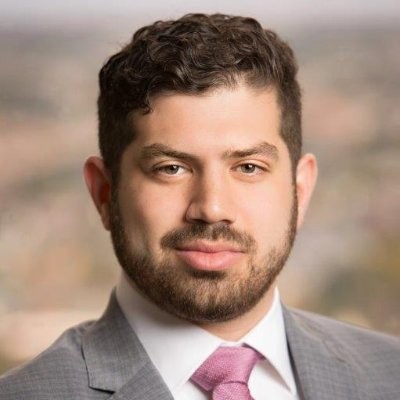
Molly Kurtzer-Ellenbogen (Blog Writer) | JWA | Page 1